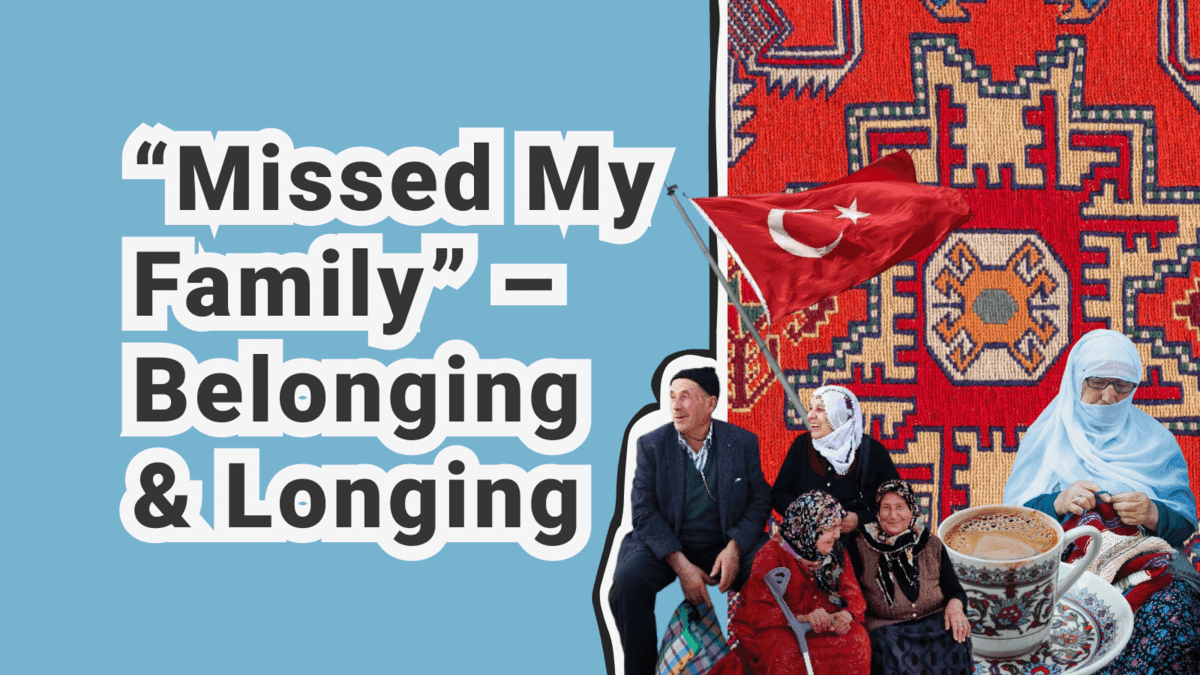
I Miss My Family So Much: Belonging and Longing While Living Abroad
Experiences of individuals living away from their families: longing, sense of belonging, and psychological effects. A scientific perspective on migration, loneliness, and identity.
Many people choose to live in a foreign country for education, work, or to start a new life. However, the experience of migration is not only an economic or social change. It is also a significant psychological process that affects a person's sense of identity, belonging, and emotional connections.
Living in a distant country can often mean freedom, new opportunities, and personal growth. At the same time, being separated from family, losing familiar cultural surroundings, and weakening social support systems can create intense feelings of longing and loneliness for some individuals.
In the psychological literature, this experience is frequently studied within the frameworks of migration psychology, cultural adaptation, and the sense of belonging.
Migration Experience and the Psychological Adjustment Process
Moving to a new country does not only involve adapting to a new geographical environment. It also entails leaving behind familiar social norms, daily routines, and relationships.Research shows that the migration process often goes through several psychological phases. Initially, excitement and the thrill of discovering new experiences may dominate. Over time, however, cultural differences, language barriers, and social isolation can become more pronounced.
During this process, some individuals may experience the following feelings:
- Intense longing for family
- Feelings of loneliness
- Identity confusion
- Feeling caught between two cultures
The emergence of these experiences is often considered a normal part of the adjustment process.
Family Longing and Emotional Bonds
For many people, family is one of the strongest psychological sources of security. Family bonds formed in childhood and adolescence play an important role in the development of a sense of safety and emotional regulation skills.According to attachment theory, humans tend to turn to relationships where they feel secure in stressful or uncertain situations. Therefore, when a person is physically distant from their family, family longing can be especially intense during challenging times.
Individuals living abroad may feel this longing even in ordinary moments of daily life. For example, shared meals with family, cultural celebrations, or conversations in one's native language are experiences that maintain strong emotional connections to past life.
The absence of such experiences can create a sense of emotional emptiness or disconnection in some people.
Why a Sense of Belonging Matters
A sense of belonging is considered one of the fundamental human needs in psychology. Humans are not only individual beings but also social beings who find meaning within relationships and communities.Feeling that one belongs to a place, community, or culture can enhance psychological security. However, during the migration experience, this sense may temporarily weaken.
Factors that can hinder the sense of belonging include:
- Language and communication difficulties
- Cultural differences
- Limited social networks
- Experiences of exclusion or discrimination
In such cases, a person may feel caught between two worlds: while trying to adapt to the new country, the attachment to their previous life persists.
In psychological literature, this is sometimes referred to as “being in-between” or “dual identity experience.”
Cultural Identity and the “Two Homes” Experience
Many long-term expatriates experience a unique psychological phenomenon: feeling a simultaneous sense of belonging to two different places.While they continue to carry the culture and values of their country of origin, the culture of the new country can also become part of their identity. This can create a rich cultural perspective for some, while producing complex emotions for others.
For instance, a person may no longer feel fully “at home” when returning to their country of origin. Likewise, they may not feel entirely settled in the host country.
This phenomenon is often described as “living between two cultures” and is a common experience in migration psychology.
Psychological Resilience While Living Away from Family
Not every migration experience is the same. Some people adjust more quickly, while others take longer and face greater emotional challenges.Psychological research shows that certain factors can facilitate the adjustment process:
- Building a new social network
- Maintaining one's cultural identity
- Keeping regular contact with family
- Developing a meaningful life purpose
Social support, in particular, is one of the most important factors that enhance psychological resilience in migration. Friendships, communities, and shared experiences can reduce feelings of loneliness.
Family Longing is a Normal Feeling
Many people living abroad experience longing for their family from time to time. This is usually not a sign of weakness, but rather a natural result of strong bonds and emotional relationships.Psychologists consider longing as a sign that the connection to past relationships continues. These connections are often a significant part of an individual’s identity.
Thus, it is often neither possible nor necessary to completely eliminate feelings of longing. A more realistic approach is learning to live with this feeling in a healthy way.
Conclusion
Living in a foreign country is not only a geographic change. It is also a profound psychological experience involving identity, belonging, and relationships.Family longing, loneliness, or feeling caught between two cultures can be natural parts of the migration experience.
At the same time, people can gradually build new social connections, integrate different cultures into their lives, and redefine their identity with a broader perspective.
Because in some cases, a home is not only the place where you were born,
but anywhere you feel you belong.
At the same time, we can also miss the place where we opened our eyes to life, formed our early experiences, and received acceptance.
“Home is the place where, when you have to go there, they have to take you in.” — Robert Frost
To create a session
You can quickly create a session request via WhatsApp or email by choosing the therapy package that best suits you.