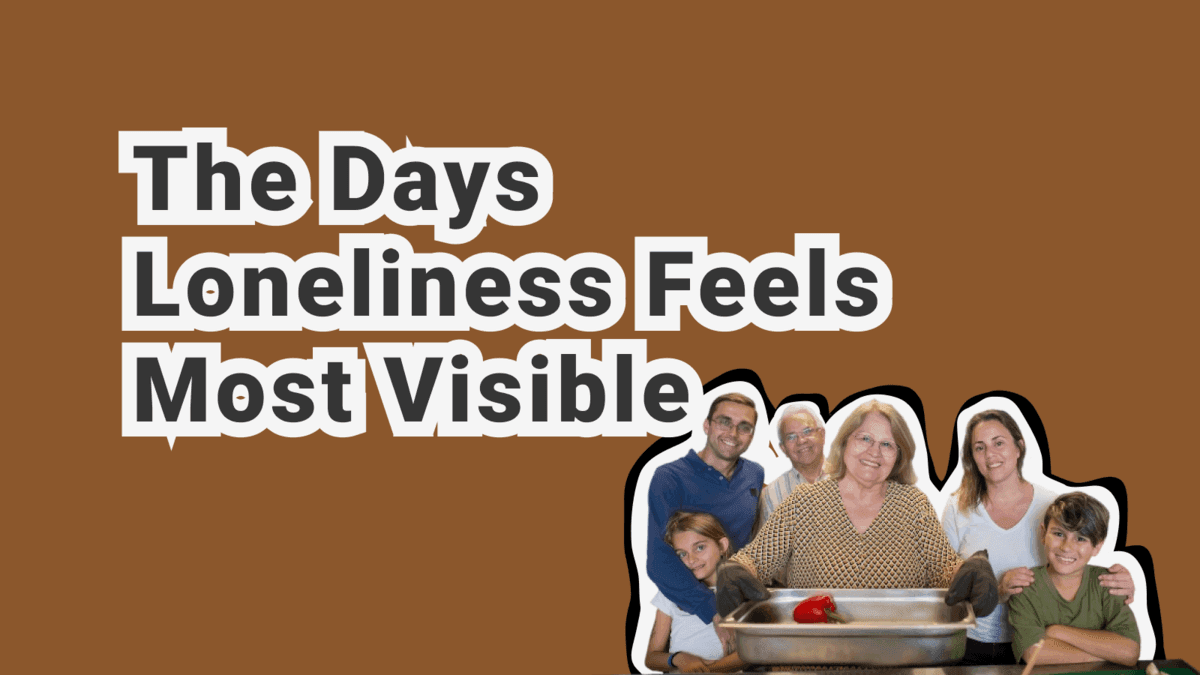
Feeling Alone on Special Days: The Need for Belonging and Invisible Loneliness
Feeling alone on birthdays or holidays is an experience many people face but rarely talk about. The need for belonging, loneliness, and psychological coping strategies.
Birthdays, holidays, and special occasions are often associated with family, closeness, and shared time. In society, these days are commonly seen as representing a warm table, a large family, and moments spent together.
For some people, however, these days can be the times when loneliness feels most visible.
Many individuals experience this feeling quietly. Even if life appears normal from the outside, there can be a strong internal need for belonging, closeness, and recognition. This feeling can intensify when one knows that many others spend these days together at home, visiting family members, and being together in some way. The thought “Everyone is together and I am the outsider” can create deep sadness.
Psychologist Roy Baumeister identifies the need for belonging as one of the most fundamental human motivations:
“People are motivated to form strong and lasting social bonds.” — Roy Baumeister & Mark Leary
Therefore, feeling lonely on special days is often not a weakness but a natural consequence of being human.
What Do People Feel When Alone on Special Days?
Loneliness is not just a physical state. Sometimes, even people living in a crowded city can feel emotionally completely alone.Individuals who spend special days alone may frequently experience:
- Feeling unseen or forgotten
- Feeling like they do not belong anywhere
- Intensely recalling past memories
- Comparing themselves to others’ lives
Psychiatrist Irvin D. Yalom notes about loneliness:
“One of the deepest anxieties in human life is the fear of not being able to form a genuine connection with others.”
Thus, loneliness felt on special days is often not limited to that day alone. Sometimes, this emotion can be an expression of a deeper desire for connection.
Not Everyone Has the Same Family Experience
Not all people have strong or stable family ties. For some, family can be:- Living in a distant city
- Dispersed over the years
- Estranged due to conflicts
- Experiencing loss and grief
As a result, some people may quietly feel a desire to be part of a family.
Psychologist John Bowlby, in attachment theory, emphasizes that the need for secure relationships is a lifelong human need:
“The need for secure attachments is not limited to childhood; it continues throughout life.”
Therefore, loneliness during special days often signals a desire to connect.
Social Media Can Amplify Loneliness
In the modern world, social media can reinforce these feelings. When people share holiday meals, birthday celebrations, or family photos, others may perceive their own lives as lonelier.Psychological research shows that social comparison can lead to:
- Feeling inadequate
- Increased perception of loneliness
- Decreased life satisfaction
However, these images often represent only a small portion of people’s lives.
Loneliness Is Not a Personality Flaw
Being alone on special days is often unrelated to one’s character or social skills.Life circumstances can lead people to situations such as:
- Living in a new city
- Migration or relocation
- Intense work life
- Changes in social environment
Thus, loneliness is often not a personal failure but a result of life circumstances.
Empathic Approaches to Coping with Loneliness
Psychological literature shows that one of the most important factors in coping with loneliness is developing self-compassion.Psychologist Kristin Neff defines self-compassion as:
“Self-compassion is the ability to treat yourself like a friend in difficult times.”
This approach can include:
- Accepting one’s emotions without judgment
- Viewing loneliness as part of the human experience
- Developing a kinder inner dialogue
Such an approach can help reduce the self-blame cycle often associated with loneliness.
Even Small Connections Matter
Research shows that people do not need large social networks to alleviate loneliness.Sometimes, small social interactions can be meaningful:
- A brief conversation with a friend
- Greeting a neighbor
- Participating in a community event
Sociologist Brené Brown explains belonging:
“Belonging is not created when we are perfect, but when we are authentic.”
Therefore, belonging may emerge not in large crowds but in small, genuine connections.
Building New Connections Takes Time
Social bonds in life are not fixed. Research shows that people can form new relationships throughout their lives.This process can develop through:
- Joining communities with shared interests
- Participating in volunteer activities
- Entering new social environments
Not every connection will become a deep relationship. Over time, however, small interactions can lay the foundation for stronger bonds.
Conclusion
Feeling alone on special days is an experience many people encounter but rarely express.This feeling often arises not from a personal deficiency but from the natural human need for belonging.
Research shows that people can form new connections over time, and the sense of belonging can be rebuilt. Therefore, being alone on special days does not mean the rest of one’s life will remain that way.
Sometimes, loneliness simply reminds us of one thing:
Humans are beings who seek connection.
To create a session
You can quickly create a session request via WhatsApp or email by choosing the therapy package that best suits you.