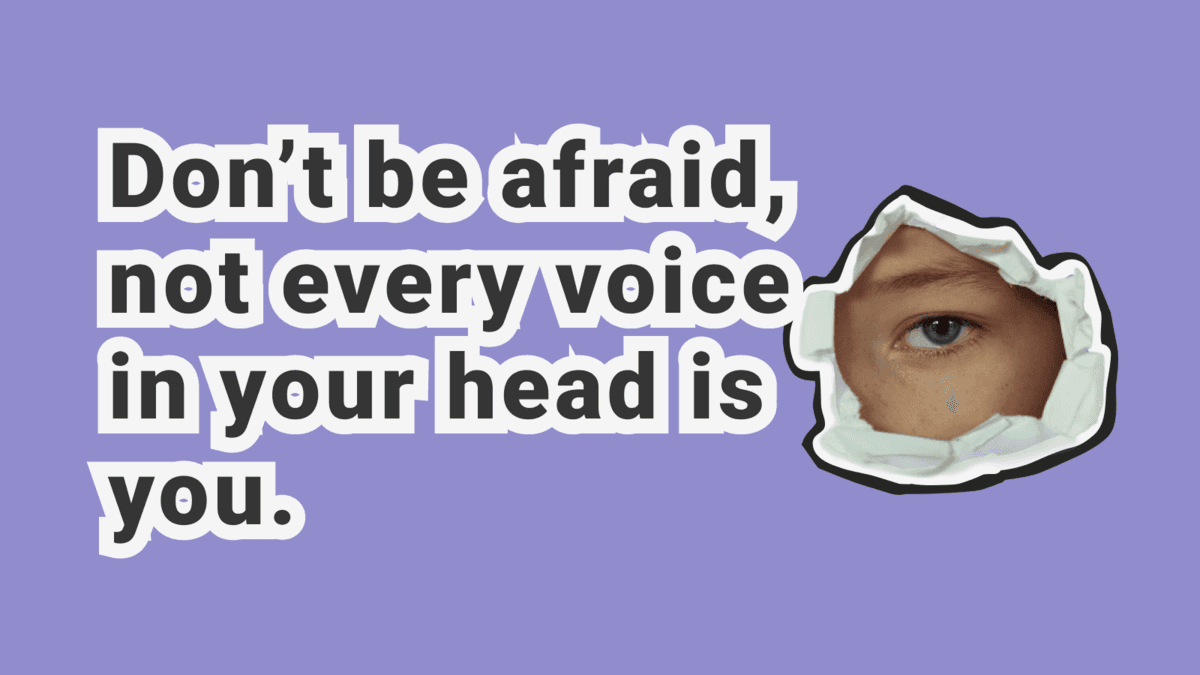
Why Do I Keep Having Negative Thoughts? Understanding and Managing the Negative Thought Cycle
Why do negative thoughts keep coming to mind? Why do these thoughts increase, and how can they be controlled? A guide with psychological and scientific explanations.
Some people report experiencing disturbing, repetitive negative thoughts that come to mind involuntarily during certain periods. These thoughts often feel uncontrollable, and over time, the person begins to ask, “Why am I thinking this way?”
In psychological literature, this phenomenon is often described using the terms intrusive thoughts or rumination. Research shows that such thoughts are actually a natural part of the human mind; however, under certain conditions, they can increase in intensity and frequency.
Therefore, what matters is not just the presence of the thought, but the way one relates to that thought.
Why Do Negative Thoughts Arise?
Negative thoughts are often not entirely random. The human mind is evolutionarily programmed to detect threats and anticipate potential risks. Therefore, the mind becomes more prone to generating negative scenarios, especially during moments of uncertainty or stress.Everyday experiences such as disappointment, an argument, a failure, or an emotional setback can increase the mind's “danger perception.” In response, the brain begins to generate potential negative scenarios continuously to prevent similar situations from happening again.
This mechanism serves a protective function. However, when this system becomes overactive, the person may find themselves trapped in a mind constantly imagining negative possibilities.
Triggers and the Start of the Thought Cycle
For many people, these thoughts become more prominent after a specific event. This event can sometimes be a clear trauma, or a smaller but emotionally impactful experience.The mind records the experience and activates the emotional trace when faced with a similar situation. For example, someone who has experienced disappointment in a relationship may automatically recreate the previous scenario in their mind when encountering a similar situation in a new relationship.
Over time, this process becomes automatic. The person unknowingly returns to the same thought patterns. Thus, thoughts not only arise,
but also form a self-perpetuating cycle.
Rumination: Thoughts Going in Circles
Rumination is when a person repeatedly turns the same thoughts over in their mind without generating any solution. While it may appear as thinking from the outside, it is not a functional form of thinking.Psychologist Susan Nolen-Hoeksema’s research shows that rumination is strongly associated with depression and anxiety. This is because, during rumination, the mind reproduces the problem continuously rather than solving it.
The person often revolves around questions like “Why did this happen?” or “Why me?” However, these questions rarely provide a new perspective; instead, they keep the person mentally stuck in the same place.
Therefore, rumination can be defined less as generating thoughts and more as being trapped within them.
“Why Are These Thoughts Increasing?”
Many people wonder why negative thoughts intensify over time. A key reason lies in the way one relates to these thoughts.Trying to suppress thoughts, in particular, can make them return stronger. Daniel Wegner’s “ironic process theory” demonstrates that the mind focuses more on thoughts it tries to suppress.
Additionally, when a person assigns too much meaning to their thoughts, they begin to accept them as reality. This increases the emotional impact of the thoughts. Over time, when a person is alone or in a mental void, these thoughts arise more easily.
In short, thoughts grow not only because of their content,
but also due to the importance and reaction given to them.
Are Thoughts Real?
According to cognitive-behavioral therapy, not every thought that crosses the mind has to be correct or true. The human mind constantly produces interpretations, some of which can be inaccurate.Especially in anxiety, the mind tends to exaggerate probabilities. A small possibility may be perceived as a definite reality.
At this point, it is important to evaluate the thought rather than accept it automatically. The mere existence of a thought does not mean it is true.
When this awareness develops, the person begins to distinguish:
“Is this real, or is it a scenario my mind has created?”
The Cycle Between Emotions and Thoughts
Thoughts and emotions are not independent. On the contrary, they form a continuous feedback loop.When a negative thought arises, it generates emotions such as anxiety or fear. These emotions, in turn, prompt the mind to produce more negative thoughts. Soon, the person finds themselves in a powerful internal loop.
If this cycle is not broken, it strengthens over time. Therefore, simply trying to change the thought is not enough. The person also needs to regulate their emotional state.
Why Understanding the Source of These Thoughts in Therapy Matters
Recurring negative thoughts are often not just a product of the “current situation”; they are usually linked to past experiences, learned beliefs, and emotional traces.The goal in psychotherapy is not merely to silence the thought,
but to understand why it has emerged.
A therapist examines the person’s thought patterns and considers:
- When did this thought first appear?
- In what situations is it triggered?
- Which core belief is this thought linked to? (e.g., “I am not enough,” “I am unsafe”)
- Which emotion is this thought trying to protect or prevent?
Through this process, the person often realizes:
Many thoughts in the mind are a continuation of coping strategies that worked in the past.
For example, someone who was criticized may constantly imagine worst-case scenarios to avoid mistakes. This thought is actually a form of protective mechanism.
Therapy makes these mechanisms visible and helps the person develop more functional ways to regulate thoughts and emotions.
What Can Be Done in This Situation?
Notice the thoughtThe first step is to become aware of the thought rather than merging with it automatically. When the person sees the thought as “content from my mind” rather than “my thought,” its impact decreases.
Create distance from the thought
Acceptance and Commitment Therapy (ACT) suggests putting distance between oneself and thoughts. The goal is not to eliminate the thought, but to reduce its influence.
Question the thought
Testing the truth of a thought weakens its power. Producing alternative explanations prevents the mind from getting stuck in a single scenario.
Consciously redirect attention
Rather than letting attention drift, actively redirecting it is important. Guiding the mind to another activity can break the thought cycle.
Support bodily regulation
Basic physiological processes like breathing, movement, and sleep directly affect the nervous system. When bodily balance is achieved, mental intensity decreases as well.
When to Be Cautious
In some cases, these thoughts can become more intense and challenging. If thoughts begin to affect daily life, relationships, or functioning, careful attention is required.Especially if thoughts are uncontrollable, generate intense anxiety, or reduce quality of life, seeking professional support can be an important step.
Such cases may be associated with anxiety disorders, obsessive thought patterns, or post-traumatic processes in some individuals.
Conclusion
Negative thoughts are often a natural part of the human mind’s functioning. However, the relationship one has with these thoughts determines their impact on life.Rather than suppressing thoughts, understanding, questioning, and distancing oneself from them can help the mind function more balanced over time.
In some cases, managing this process alone can be difficult. Especially if thoughts are repetitive and affect quality of life, working with a psychologist can be a strong step toward understanding the source of these thoughts and developing healthier coping strategies.
Not every thought is real.
But if misunderstood,
it can feel real.
To create a session
You can quickly create a session request via WhatsApp or email by choosing the therapy package that best suits you.